Music
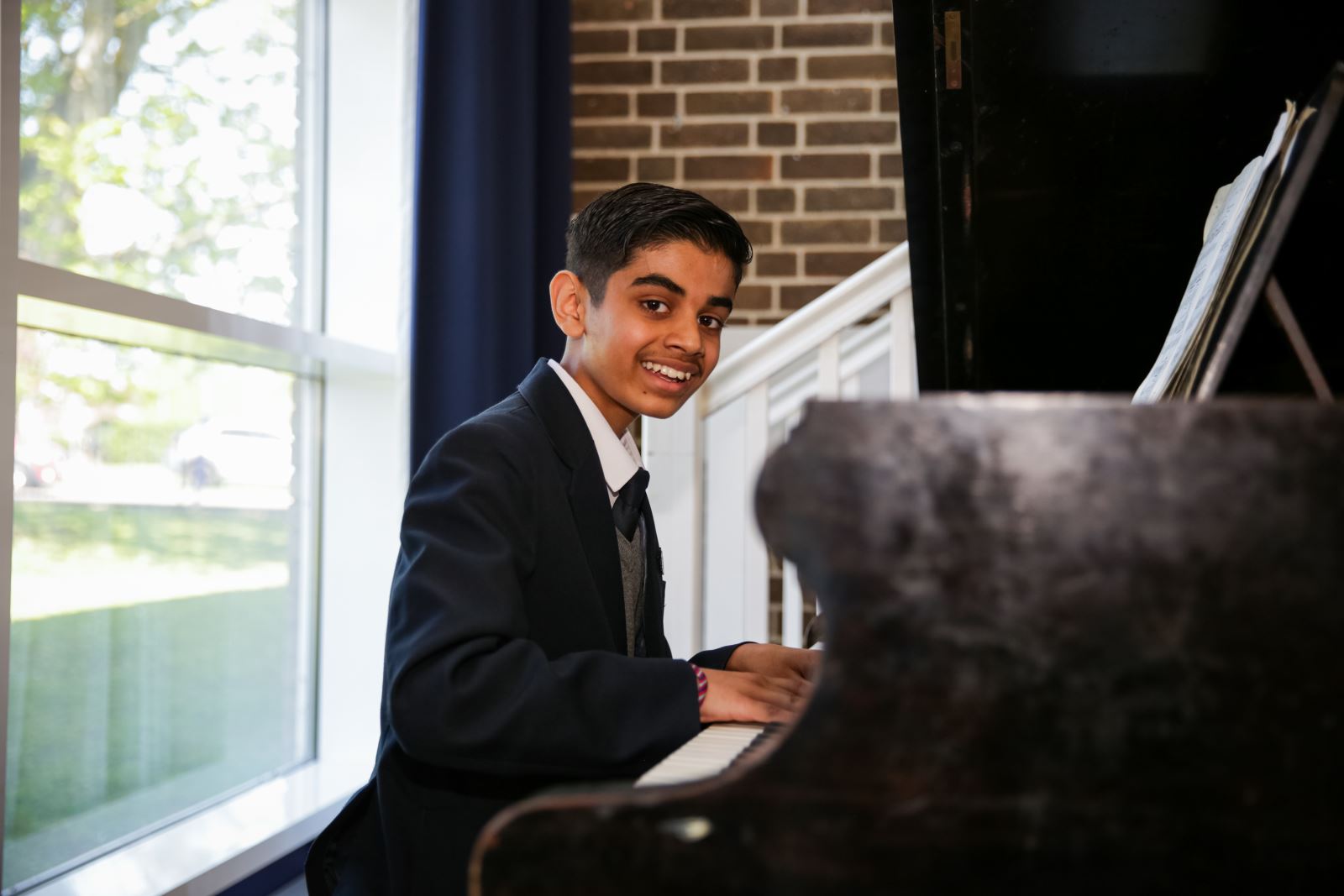
The aim of the music department is to foster an enjoyment and involvement in music, thus enabling all pupils to make significant progress according to their ability. We hope to inspire and encourage enthusiasm for the subject and to develop interest and respect for all styles and genres of music.
The department consists of a purpose-built classroom, as well as seven music practice rooms. Extensive use is made of a wide range of instruments and equipment: electronic keyboards, tuned and untuned percussion, guitars, bass guitars and drum kits. We also have a class set of laptops, on which we use a range of software and cloud-based resources to support pupils’ learning in a variety of contexts.
Alongside our curriculum provision, we also offer a number of enrichment and extra-curricular opportunities. Instrumental lessons are offered on the following instruments:
Instruments Offered
-
Piano
-
Guitar
-
Drum kit
-
Violin
-
Keyboard
-
Bass Guitar
-
Percussion
-
Viola
-
Cello
-
Double Bass
-
Flute
-
Oboe
-
Bassoon
-
Clarinet
-
Saxophone
-
Trumpet
-
Cornet
-
French Horn
-
Euphonium
-
Tuba
-
Voice
-
Tenor Horn
-
Trombone
-
DJing
A large number of our students learn a musical instrument, and we feel strongly that it is our duty as a school to support the musical journeys of these young people through offering appropriate ensemble and performance experiences. We therefore run a large number of ensembles to cater for musicians of all ages, interests, and abilities.
Ensembles
-
String Group – Weekly rehearsals for all string players
-
String Quartet – Weekly rehearsals for advanced string players
-
Choir – Weekly rehearsals for more experienced singers
-
Community Choir – Open rehearsals for the whole Goldington community
-
Orchestra – Weekly rehearsals for all wind, string and percussion players
-
Bandits – Weekly rehearsals for singers, keyboard players, drummers and guitarists
-
Composing Club – Advanced composition, including LSO St Luke’s project
-
Year 8 Composing Club – For creatively engaged composers
-
Jazz Group – Jazz standards and improvisation skills
-
Keyboard Club – Open to all students to develop keyboard skills
-
Ukulele Club – Weekly opportunities to learn ukulele repertoire
-
Musical Theatre – Autumn/Spring rehearsals for the annual production
-
Guitar Group – Regular playing opportunities throughout the year
-
Percussion Group – Weekly rehearsals for a range of percussion instruments
-
DJing Club – Weekly rehearsals for aspiring DJs
-
Music Production Club – Learning sound production and recording
We understand the importance of offering a range of performance opportunities designed to share and celebrate achievement and develop confidence in both formal and informal settings. These include assemblies, lunchtime showcases, and informal concerts such as Strings in Spring and Battle of the Bands.
Involvement in community concerts is an important part of our calendar. We take part in events such as The Christmas Tree Festival at St Paul’s, Bedfordshire Battle of the Bands, Bedford Breakthrough nights at Esquires, and collaborative events such as Fiddle Fiesta and Wind Band Days.
Professional venues help raise the profile of music and offer real-world experiences. Our summer concert at the University of Bedfordshire and our musical production at The Place Theatre are always well received.
Students also have opportunities to work alongside professional musicians and organisations, offering inspiration, insight into the arts industry, and valuable experience.
For those interested in pursuing a career in the arts, we run an Arts Award scheme, offering a respected qualification and opportunities to develop essential life skills.
Overview of Key Stage 3
Our KS3 curriculum offers all students a broad and practical learning experience that develops musical skills, knowledge and understanding across a range of genres through performing, composing and listening.
Year 7
-
The Blues
-
The Classical Music of North India
-
Film Music
Year 8
-
Jazz
-
Pop and Rock
-
Songwriting
Year 9
-
Minimalism and Music for Video Games
-
The Art of Being a DJ
-
Samba
Focus for Learning
Performing
-
Keyboard skills
-
Ensemble skills
-
Chords and chord sequences
-
Improvising melodies within structures
Composing
-
Using and understanding musical elements
-
Using coherent structures
-
Using genre-specific musical devices
-
Using technology in composition
Listening
-
Identifying instruments and their roles
-
Recognising musical structures
-
Identifying stylistic features and characteristics
GCSE Music – Useful Information
Please refer to the OCR Specification using this link: GCSE Music Specification
Specification Pages
-
Page 4: Specification overview
-
Pages 8–12: Areas of study
-
Pages 24–33: NEA Marking Criteria
-
Pages 45–48: Language for learning
-
Pages 49–63: Difficulty Mark Criteria